MPS BRIEF · SEPTEMBER 2026
I can get anywhere.
What a week in Paris taught me about AI. It didn’t replace judgment. It removed enough friction to step into the unfamiliar.
By David Morris
5 MIN READ
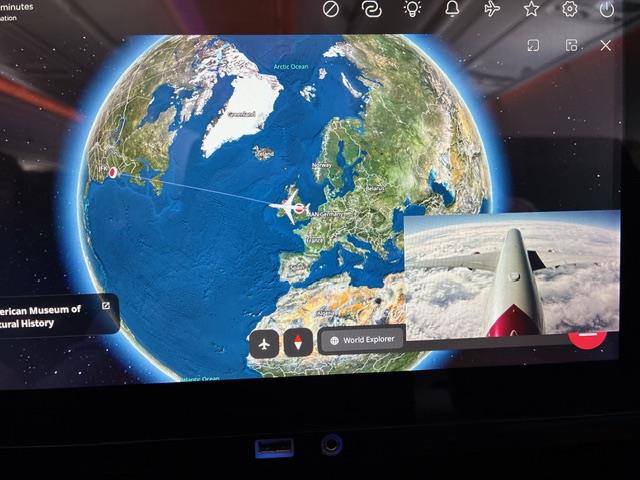
On the flight home from Paris, I was 40,000 feet above the Atlantic, talking into my iPhone through Starlink while the screen in front of me showed our plane crossing the ocean — and a live view from its tail.
Pretty mind-boggling.
I kept thinking about how much technology had changed the trip itself.
Before this, I mostly used AI for work: research, analysis, strategy. Useful, absolutely. Personal? Not really.
Paris changed that.
How it actually worked
Before we left, I created a ChatGPT project for flights, activities, neighborhoods and logistics. Once we arrived, I started a separate conversation for each day and added pictures, questions, notes and whatever else came up.
Where can I get cough drops?
What’s worth seeing nearby?
Find us somewhere casual that feels like Paris.
What does this sign mean?
Google Maps may have been the moment that really got me. I entered where I wanted to go, hit navigate, and the camera scanned the street. It walked me to the Métro, found the right line and direction, and showed every stop.
I remember thinking: I can get anywhere.
At a museum, I photographed a Van Gogh and learned its history while standing in front of it. Google Translate helped with signs, menus and messages — enough that I could stop worrying about getting everything wrong and pay attention to where I was.
Each night, ChatGPT turned our pictures and notes into a family update in three or four minutes.
Where it fell short
The restaurants.
Recommendations were the biggest frustration. It kept assuming what I wanted, so I kept explaining: casual, bakeries, local, unique to Paris. Eventually it learned, but it took some work.
The phone.
My wife would tell you I relied on it too much at times. She wasn’t wrong. By the end, though, she was using it too, even for simple questions about what was nearby or worth visiting.
AI still needs a person who knows what good looks like. It doesn’t replace judgment, creativity or critical thinking. If you let it think for you, you’ll probably just create more slop, faster.
What it actually gave us
Less friction around being somewhere unfamiliar.
We met more people. Tried more things. At a great little Italian restaurant, we talked with our server about the food and his story, then ended up talking with other guests.
AI didn’t experience that for us. It just gave us more confidence to step into it.
This isn’t only about travel. It’s about moving toward something unfamiliar when you’re not sure what you’re doing.
If you’re skeptical, try this
Don’t start with an AI strategy. Start with thirty minutes.
- List five things you do regularly.Things you wish took less time. Nothing grand.
- Pick one.The one that annoys you most is usually the right one.
- Open ChatGPT, Gemini or Claude.Ask: “How can you help me do this better?”
- Have it ask you three questions, one at a time.So it understands how you do it now and what good looks like before it gives advice.
THE STARTER PROMPT
“I want to improve [task]. Before giving me advice, ask me three questions, one at a time, so you understand how I do it now and what good looks like.”
Just try it.
You may not need more expertise. You may just need less friction and enough curiosity to take the next step.
That’s increasingly how I think about our work at MPS: keeping the human in the loop and helping people move forward with more confidence. If you try the prompt, I’d genuinely like to hear what happened.
AUTHOR
David Morris
Start with one task, not a strategy.
Twenty questions, about three minutes, and a 0–100 readiness score with the three things to fix first.